
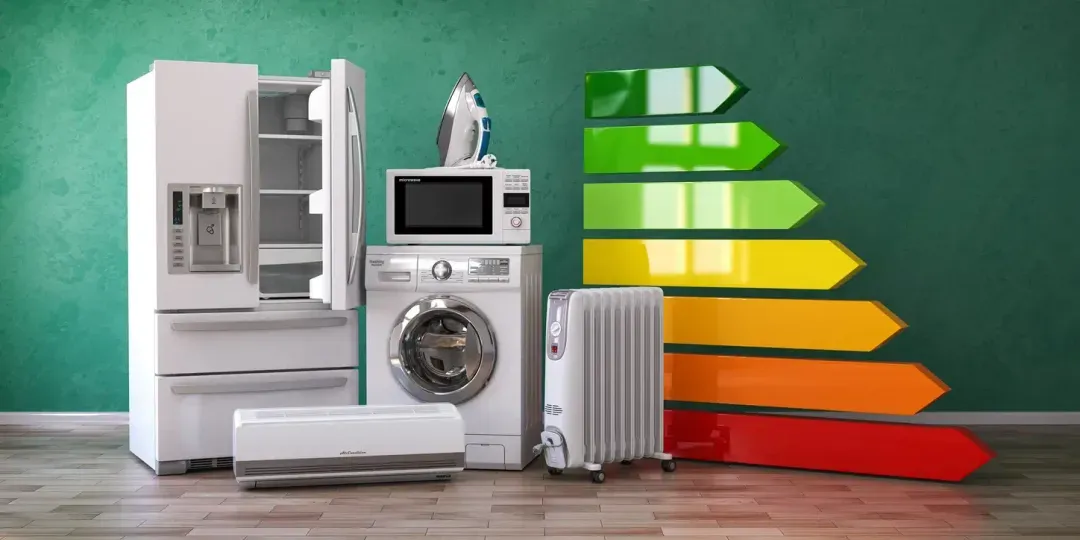
An “energy-efficient” sticker only helps if you know what it means for your bill. Here’s a practical framework to pick efficient refrigerators, ACs, washers, microwaves, and more—without overpaying up front.
Step 1: Understand Energy Labels
In India, the BEE Star Rating makes comparison simple—the more stars, the higher the efficiency within that product class. Also check the annual energy consumption (kWh/year) printed on the label; this lets you estimate real yearly cost.
Rule of thumb:
Your annual cost ≈ kWh/year × your tariff (₹/kWh). If your tariff is ₹8/kWh and the label shows 180 kWh/year, that’s ~₹1,440 per year.
Step 2: Prioritize Inverter Technology
For refrigerators and air conditioners, inverter compressors adjust speed to demand—this avoids energy spikes and runs quieter. An inverter model with a slightly higher MRP often pays for itself through lower monthly bills over 2–3 years.
Step 3: Match Capacity to Usage
Oversizing wastes energy, undersizing strains motors.
- Fridge: ~200–250L for 1–2 people; 300–360L for small families; larger if you cook bulk.
- Washing machine: 6–7 kg for couples; 8–9 kg for families.
- Microwave/OTG: 20–28L for most homes; go larger only for frequent baking/roasting.
Step 4: Look for Low Standby and Smart Modes
Features like Eco, Sleep, Auto-clean, drum clean (washers), and half-load (dishwashers) matter. Low standby power (<1W) prevents “vampire” consumption when the appliance is off but plugged in.
Step 5: Build a Mini Audit Before You Buy
- Compare kWh/year of your shortlist
- Note inverter vs. non-inverter
- Check noise (dB) if the appliance sits near bedrooms
- Confirm warranty (compressor/motor vs. comprehensive)
- Add descale filters or surge protectors where useful
Maintenance = Efficiency
- AC & fridge: Clean condenser coils 1–2×/year; keep door gaskets intact.
- Washer: Monthly drum clean cycle; keep door slightly ajar after washes.
- Induction & microwave: Wipe spills immediately; use flat-bottom cookware.

 No products in the cart.